


Preparing for TAVI

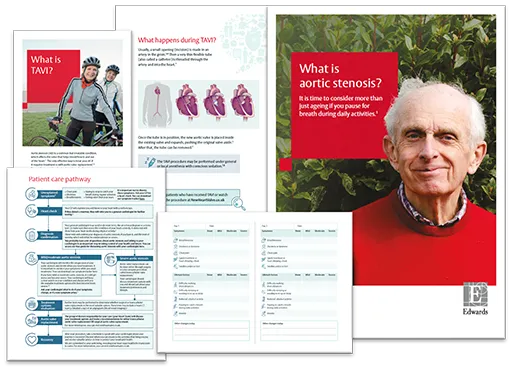
The sooner you treat your aortic stenosis, the sooner you can get back to the life you want to live. Although life can get busy, treating your severe aortic stenosis should still be a priority. TAVI (also known as transcatheter aortic valve implantation) is a less invasive1,2 way to treat your severe aortic stenosis compared to open heart surgery. With TAVI, you don't need to have your chest opened. TAVI has a shorter procedure time and hospital stay compared to surgery. Most patients return home sooner and have shorter recovery time, getting them back to everyday activities.3-5

It's normal to have questions about the procedure and how quickly you can get back to your normal life. It is important to ask your cardiologist/Heart Team questions you may have.

What to do before TAVI

Your doctors will provide information and specific instructions on preparing for your TAVI procedure. In addition to these instructions, there are a few things you might consider in the weeks and days leading up to your procedure.


Ask how much you can exercise

Ask your cardiologist and/or Heart Team what level of activity is appropriate. Even short periods of exercise can become difficult depending on how severe your  aortic stenosis  has become. It is important to make note of new symptoms that might arise when exercising, such as breathlessness, chest pain, or feeling faint.7


Talk to your doctor about your medications

Consult your cardiologist and/or Heart Team to figure out which medications you should or should not take leading up to and on the day of your procedure.


Eat a healthy diet

Talk to your cardiologist and/or Heart Team about which foods are recommended. Also, discuss with your doctors if and when you should stop eating or drinking prior to your procedure.


Get a dental checkup

Oral bacteria can contribute to valve infections; therefore, your doctor may recommend you visit your dentist prior to the procedure.8,9


Make a recovery plan

TAVI has a shorter procedure time and hospital stay compared to surgery. Most patients return home within a few days and have a shorter recovery time, getting them back to everyday activities. However, some patients may take longer to go home.2−6,10,11 Your doctor can provide more specific information about how long you may be in the hospital. It’s important to work out details such as who will take you home, stay with you, and/or help you prepare meals.


Ask any questions you have about the TAVI procedure

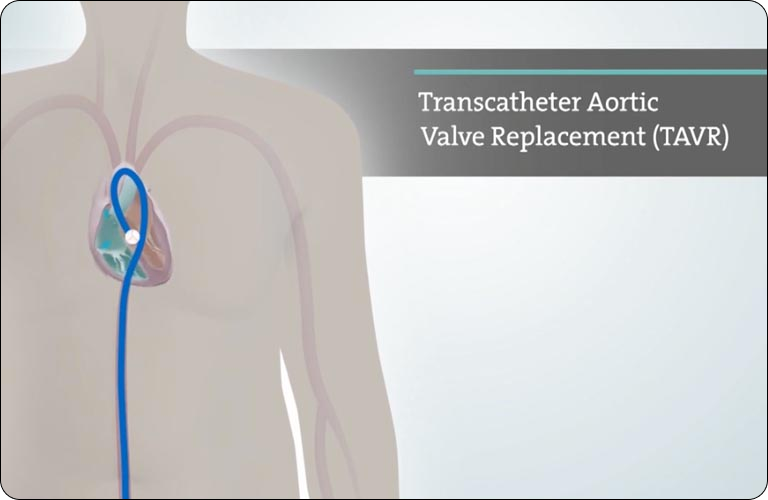
Your TAVI Doctor will walk you through the details of the procedure. Ask questions about anything you don’t understand. Find out what happens during the TAVI procedure.

Free TAVR info kit

Want more information delivered directly to you?

Get a free information kit by email or mail to learn more about severe aortic stenosis and TAVI as a treatment option.

What you’ll receive in your kit:

  • Education on severe aortic stenosis and symptoms checklist once it becomes severe
  • Information on TAVI as a treatment option
  • Discussion guide for talking with your doctor
Order your free info kit

References
1. Van Geldorp MWA, Heuvelman HJ, Kappetein AP et al. The effect of aortic valve replacement on quality of life in symptomatic patients with severe aortic stenosis. Neth Heart J. 2013 Jan;21(1):28–35. doi: 10.1007/s12471-012-0362-y.
2. Kleczynski P, Bagieński M, Sorysz D et al. Short- and intermediate-term improvement of patient quality of life after transcatheter aortic valve implantation: A single-centre study. Kardiol Pol. 2014;72(7):612–616. doi: 10.5603/KP.a2014.0065.
3. Reynolds MR, Magnuson EA, Wang K et al. Health-related quality of life after transcatheter or surgical aortic valve replacement in high-risk patients with severe aortic stenosis: results from the PARTNER (Placement of AoRTic TraNscathetER Valve) Trial (Cohort A). J Am Coll Cardiel. 2012;60(6):548–558. doi: 10.1016/j.jacc.2012.03.075.
4. Mack MJ, Leon M, thourani VH et al. Transcatheter Aortic-Valve Replacement with a Balloon-Expandable Valve in Low-Risk Patients. N Engl J Med. 20l9;380(18):1695–1705 and supplementary material. doi: 10.1056/NEJMoa1814052.
5. Thourani VH, Kodali S, Makkar RR et al. Transcatheter aortic valve replacement versus surgical valve replacement in intermediate-risk patients: a propensity score analysis. Lancet. 2016;387(10034):2218–2225. doi: 10.1016/S0140-6736(16)30073–3.
6. Leon MB, Smith CR, Mack MJ et al. Transcatheter or Surgical Aortic-Valve Replacement in Intermediate-Risk Patients. N Engl J Med. 20l6;374(17):1609–1620. doi: 10.1056/NEJMoa1514616.
7. Lindman BR, Clavel MA, Mathieu P et al. Calcific aortic stenosis. Nat Rev Dis Primers. 2016;2:16006. doi: 10.1038/nrdp.2016.6.
8. Krasniqi L, Schødt Riber LP, Nissen H et al. Impact of mandatory preoperative dental screening on post-procedural risk of infective endocarditis in patients undergoing transcatheter aortic valve implantation: a nationwide retrospective observational study. Lancet Reg Health Eur. 2023:36:100789. doi: 10.1016/j.lanepe.2023.100789. eCollection 2024 Jan.
9. Carasso S, Ben Amy DP, Kusniec F et al. Dental screening prior to valve interventions: Should we prepare transcatheter aortic valve replacement candidates for "surgery"? Int J Cardiol. 2019;294:23–26. doi: 10.1016/j.ijcard.2019.07.081.
10. Baron SJ, Magnuson EA, Lu M et al. Health Status After Transcatheter Versus Surgical Aortic Valve Replacement in Low-Risk Patients With Aortic Stenosis. J Am Coll Cardiol. 20l9;74(23):2833–2842. doi: 10.1016/j.jacc.2019.09.007.
11. Barbanti M, Van Mourik MS, Spense MS et al. Optimising patient discharge management after transfemoral transcatheter aortic valve implantation: the multicentre European FAST-TAVI trial. Eurolntervention. 20l9;15:147–154. doi: 10.4244/EIJ-D-18-01197.

PP--EU-7602 v1.0